Does your brain see the world, or predict it?
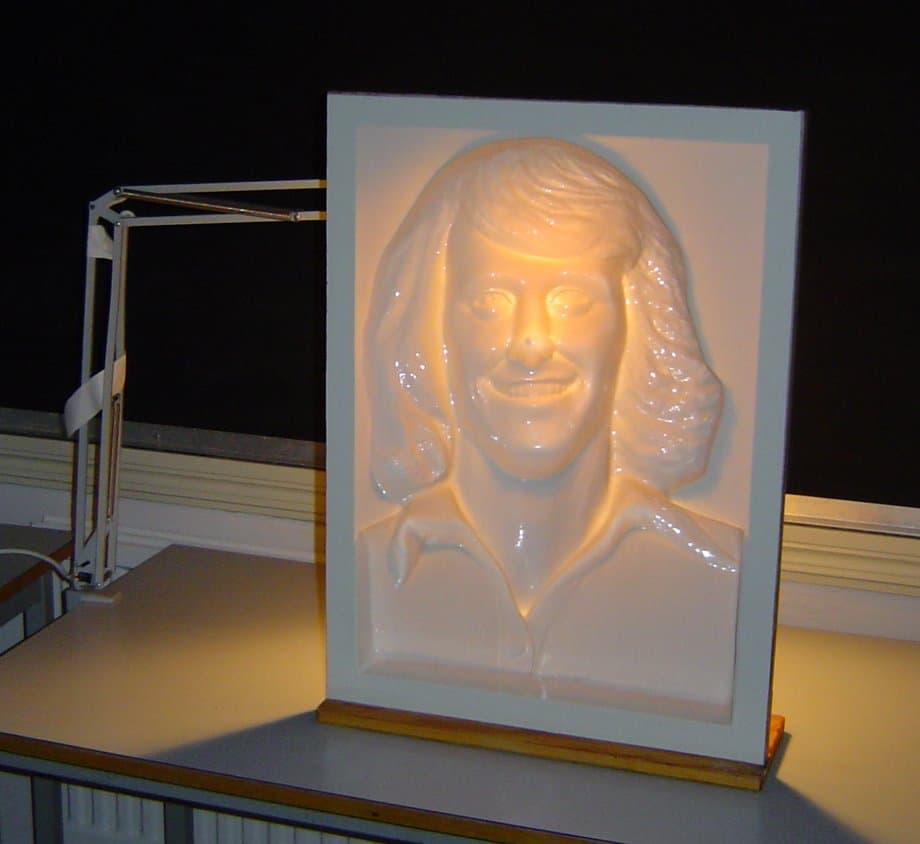
Look at a hollow mask from the inside and you'll see a normal face bulging toward you, even with both eyes telling you it's hollow. Your brain bet on a face and won.
▶ Start the storyAccording to a leading theory called predictive coding, your brain does a lot of predicting, and much less passive receiving than it feels like. It keeps a running model of what's out there and uses it to guess what your senses are about to report. Then it compares the guess with the actual signals. If they match, little needs to be sent onward. If they don't, the mismatch, called a prediction error, travels up and updates the model. On this view, what you perceive is largely your brain's best guess, corrected by surprise.
The hollow-mask illusion makes this vivid. Look into the inside of a mask and you see a normal face bulging toward you, even though shading and your two eyes both signal that it's hollow. The psychologist Richard Gregory called it evidence for the power of top-down knowledge in vision: your brain has seen a lifetime of faces that stick out, and that expectation overrules the evidence.
It also explains why you can't tickle yourself. When you move, your brain predicts the touch you're about to feel and cancels much of it out. Add a delay with a robot arm so the prediction is off, and the tickle comes back.
The idea is old, going back to Helmholtz around 1860, and the evidence is strongest for perception. But be careful with the bold version. Nobody yet agrees on how the brain would actually compute these predictions, and the theory is hard to pin down well enough to test.
Quiz me
0/3
Recap
Perception is a forecast corrected by surprise, but how the brain computes it is still unsettled.
Surprising fact · The hollow-mask illusion is weaker in people with schizophrenia, whose brains seem less inclined to impose the expected face.
Sources (4)
No source, no claim. Every fact in this lesson (32 claims) cites at least one of these.