How did scientists discover that lichens are secretly two organisms?
A Swiss botanist's claim that lichens were two organisms in one was rejected by the leading experts, and it took 72 years to prove it in the lab.
▶ Start the storyScientists discovered that lichens are secretly two organisms in 1867, when the Swiss botanist Simon Schwendener proposed what he called his dual theory: that a lichen is really a fungus living together with algae or cyanobacteria, although lichens had long been treated as single organisms. A lichen, as we now describe it, is a hybrid colony of algae or cyanobacteria living symbiotically among the threads of one or more fungus species, with bacteria embedded in its outer layer, all working together in what biologists call a mutualistic relationship. Lichens were in fact the very lifeform that first brought the word "symbiosis" into biology.
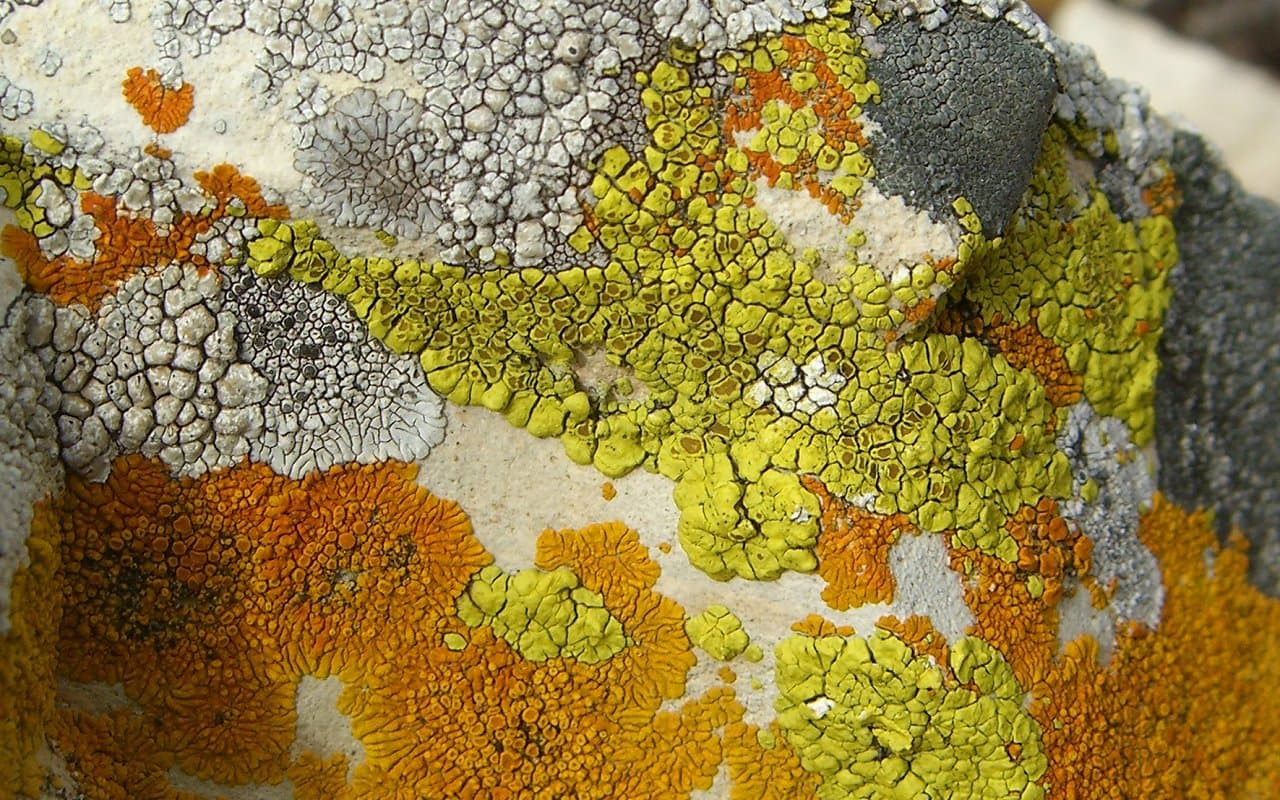
Schwendener built his idea from years spent examining the anatomy of lichens, algae, and fungi under a light microscope, but he had no direct experimental proof that the two partners were really separate species living combined. That gap in evidence gave his critics an opening. Leading lichen experts of the day rejected the theory outright, since the scientific consensus held that every living organism had to be self-sufficient on its own, not a merger of two different ones.
Not everyone dismissed Schwendener. Biologists such as Heinrich Anton de Bary and Albert Bernhard Frank were not so quick to reject his idea, and the concept soon spread into the study of microbes and of plant, animal and human pathogens. Some accounts of the debate even list Beatrix Potter, best known for The Tale of Peter Rabbit (1902), among them: by the 1890s her scientific interests centred on fungi. Yet her own biography says she did not, as previously thought, believe in Schwendener's theory. Experimental proof came only in 1939, when Eugen Thomas published the first successful re-synthesis of a lichen from its partners.
Even that wasn't the end of the story. As recently as the 2010s, researchers led by Toby Spribille discovered that many lichens long assumed to be a simple fungus-and-alga pair were actually three-way partnerships, with a second kind of fungus, a basidiomycete yeast, quietly living alongside the other two all along.
Quiz me
0/3
Recap
A lichen is not one organism but a mutualistic partnership between a fungus and algae or cyanobacteria, a theory first proposed in 1867 and proven experimentally in 1939.
Surprising fact · In the 2010s, scientists found that many lichens thought to be two-species partnerships are actually three, with a hidden basidiomycete yeast as a third partner.
Sources (3)
No source, no claim. Every fact in this lesson (15 claims) cites at least one of these.