Did one officer's refusal really stop a nuclear torpedo launch?
In 1962 a Soviet submarine captain, out of radio contact and under depth charges, ordered a nuclear torpedo readied. Firing it needed three officers to agree. One said no.
▶ Start the storyVery possibly, though accounts differ on exactly how. On 27 October 1962, at the height of the Cuban Missile Crisis, the US Navy dropped small "signalling" depth charges on the Soviet submarine B-59 at the blockade line, unaware that it carried a nuclear-tipped torpedo. Too deep to monitor radio traffic, captain Valentin Savitsky assumed war had begun and ordered the torpedo prepared, with the aircraft carrier USS Randolph as its target. Firing it required the consent of three senior officers: the captain, the political officer and Vasily Arkhipov, the flotilla commander, who happened to be aboard. Arkhipov alone refused, and the torpedo was not launched. Accounts differ on whether he talked Savitsky out of the attack, or whether the captain himself concluded that his only reasonable choice was to surface.
Arkhipov's reputation counted in the argument that broke out in the sweltering control room: the year before, he had exposed himself to severe radiation to help save a submarine with an overheating nuclear reactor. The weapon he refused to approve was a 15-kiloton torpedo, roughly as powerful as the bomb dropped on Hiroshima.
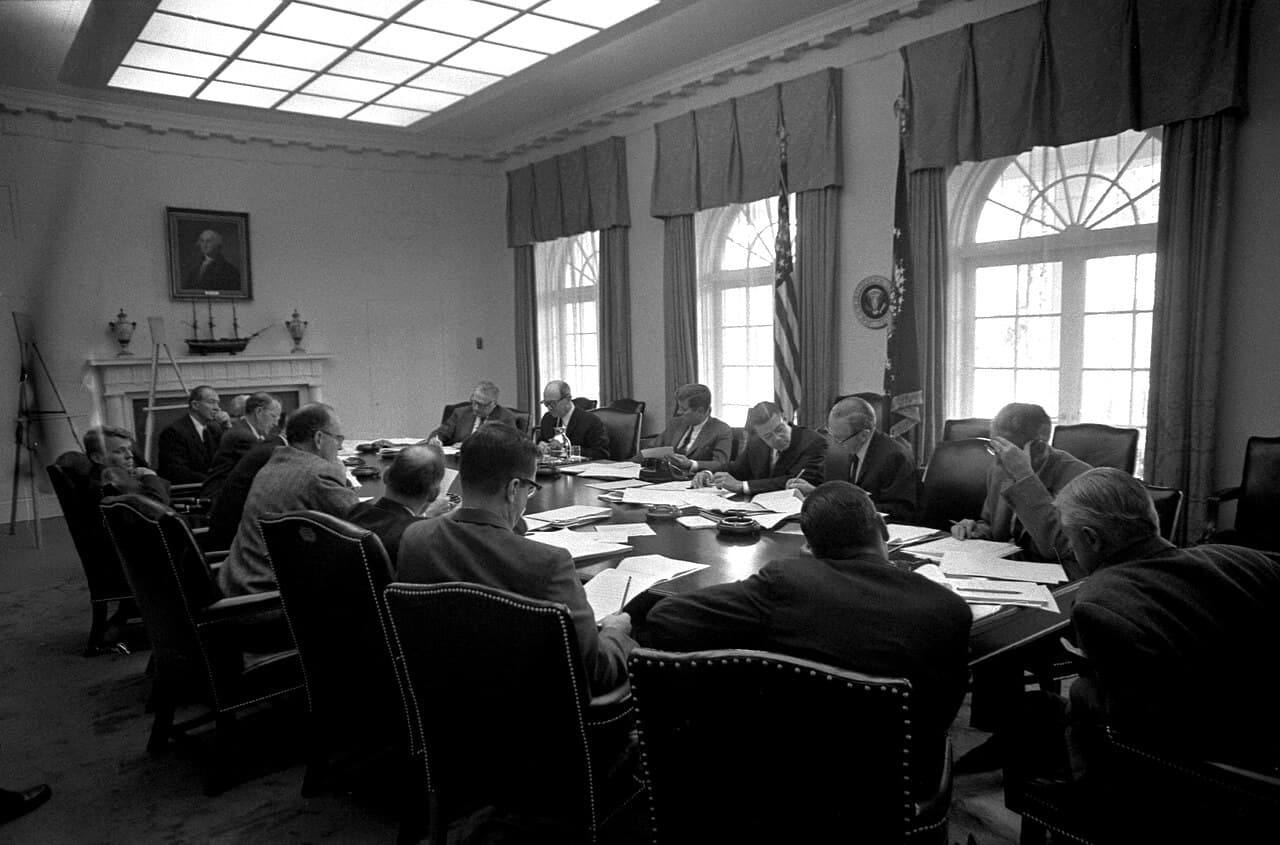
The crisis had begun when a U-2 spy plane photographed missile launch facilities in Cuba. Kennedy was advised to launch an air strike and an invasion, but on 22 October he ordered a naval blockade instead, calling it a "quarantine" so the US could avoid the formal implications of a state of war. On the day B-59 was attacked, which the White House later called "Black Saturday," a US pilot, Major Rudolf Anderson, was shot down over Cuba: the only combat death of the crisis.
It ended in a deal. The Soviets dismantled their weapons in Cuba under UN verification in exchange for a public US pledge not to invade, and the US secretly agreed to remove its own missiles from Turkey. What had happened aboard B-59 was only recognized at a conference in Havana in October 2002, where Thomas Blanton, director of the National Security Archive, said: "A guy called Vasily Arkhipov saved the world."
Quiz me
0/3
Recap
The deal was half hidden: Soviet missiles out of Cuba in public, American missiles out of Turkey in secret, which made Khrushchev look like the loser.
Surprising fact · One Soviet officer, Vasily Arkhipov, refused to approve a nuclear torpedo launch his captain had ordered, and the episode wasn't revealed publicly until 2002.
Sources (1)
No source, no claim. Every fact in this lesson (25 claims) cites at least one of these.