How do we know when humans first started making tools?
A team took a wrong turn near a Kenyan lake and found stone tools older than our own genus, Homo.
▶ Start the storyWe know when tools began because stone lasts, and layers of volcanic ash around it can be dated. For decades the oldest known tools were the Oldowan kind. They are simple sharp flakes knocked off one stone with another. Louis Leakey first found them at Olduvai Gorge, Tanzania, in the 1930s. The oldest ones, from Nyayanga in Kenya, are about 2.9 million years old.
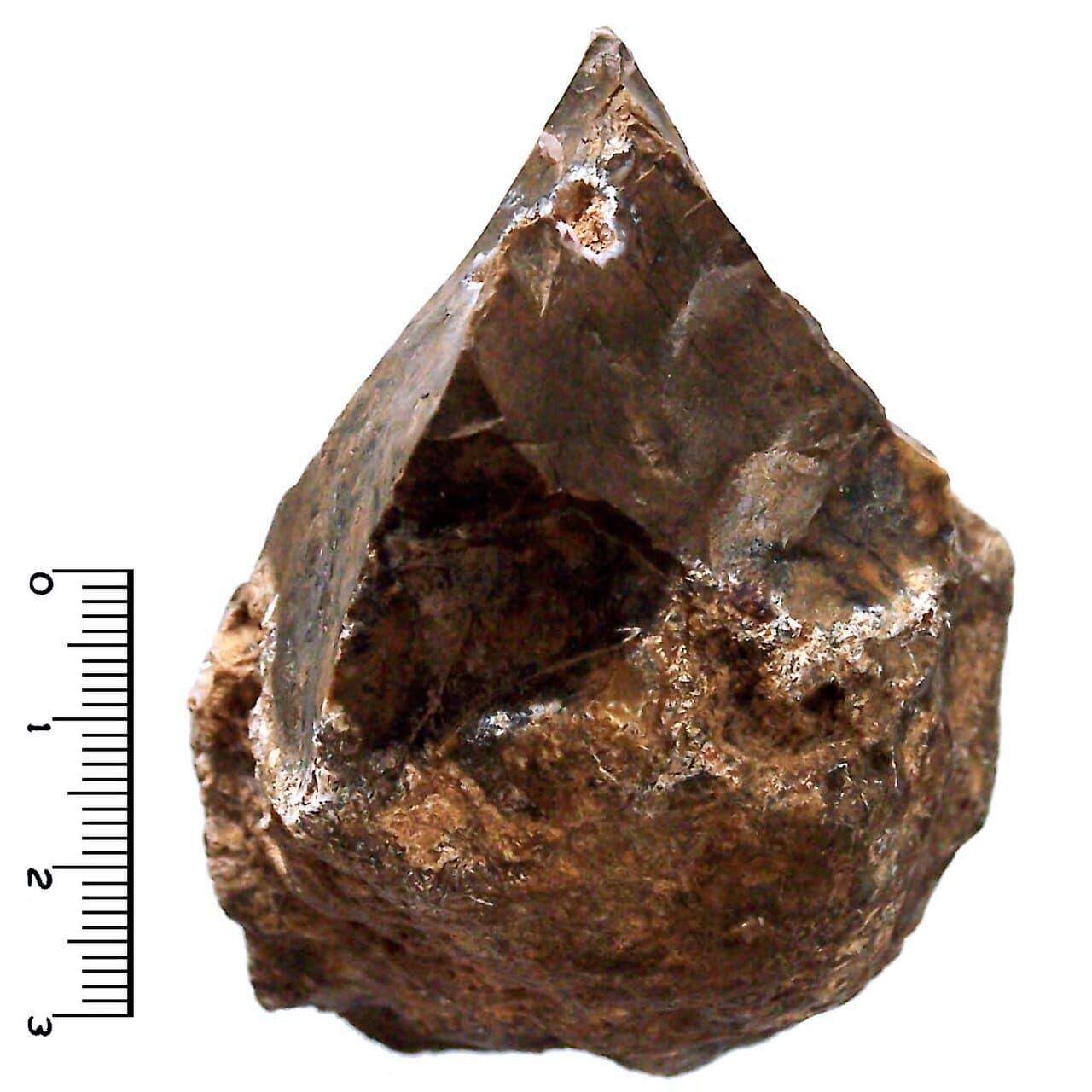
3.3 million years
These tools were long credited to Homo habilis, the "handy man". It seemed neat: our genus, Homo, was the toolmaker. But the evidence is thin. Habilis is known from only two badly broken skeletons. And no one can say for sure which species made the first Oldowan tools.
Then, in 2011, a team near Lake Turkana, Kenya, took a wrong turn. They ended up at an unexplored site, later called Lomekwi 3. There they found stone tools 3.3 million years old. That is about 500,000 years before the genus Homo existed. So the first toolmakers were probably older hominins, such as australopithecines.
3.3 Ma
Lomekwi 3 tools, before the genus Homo
2.9 Ma
Oldest Oldowan tools, Nyayanga, Kenya
2.6 Ma
Early Oldowan tools at Gona, Ethiopia
2.4 Ma
Homo habilis appears
1.7 Ma
Oldowan tools still in use
The Lomekwi makers chose big, heavy stones on purpose. The largest tool weighs 15 kilograms. One flake even fits back onto the stone it came from. What they used the tools for is still a mystery: the animal bones nearby show no cut marks.
Quiz me
0/3
Recap
The 'first toolmaker' keeps getting older with every new dig.
Surprising fact · Archaeologists found the oldest known tools purely because they took a wrong turn on the way to a different site.
Sources (3)
No source, no claim. Every fact in this lesson (19 claims) cites at least one of these.