How did a critic's insult accidentally name an entire art movement?
A critic mocked Claude Monet's hazy harbor painting as an unfinished sketch, not art. The word he seized on to insult it, "Impression," became the name of one of art's best-known movements.
▶ Start the storyIn 1874, Claude Monet hung a hazy, loosely brushed painting of a sunrise over the harbor at Le Havre. He called it simply Impression, Sunrise. A critic named Louis Leroy wrote a hostile review and, taking aim at that title, coined the word "Impressionism" to mock the whole group. At first the term was ironic: it meant the painting looked unfinished. The name stuck anyway, and "Impressionism" became the label for an entire movement, with Monet now seen as its founder. Leroy later admitted he regretted it, grumbling that most of the painters calling themselves Impressionists weren't even that impressionistic.
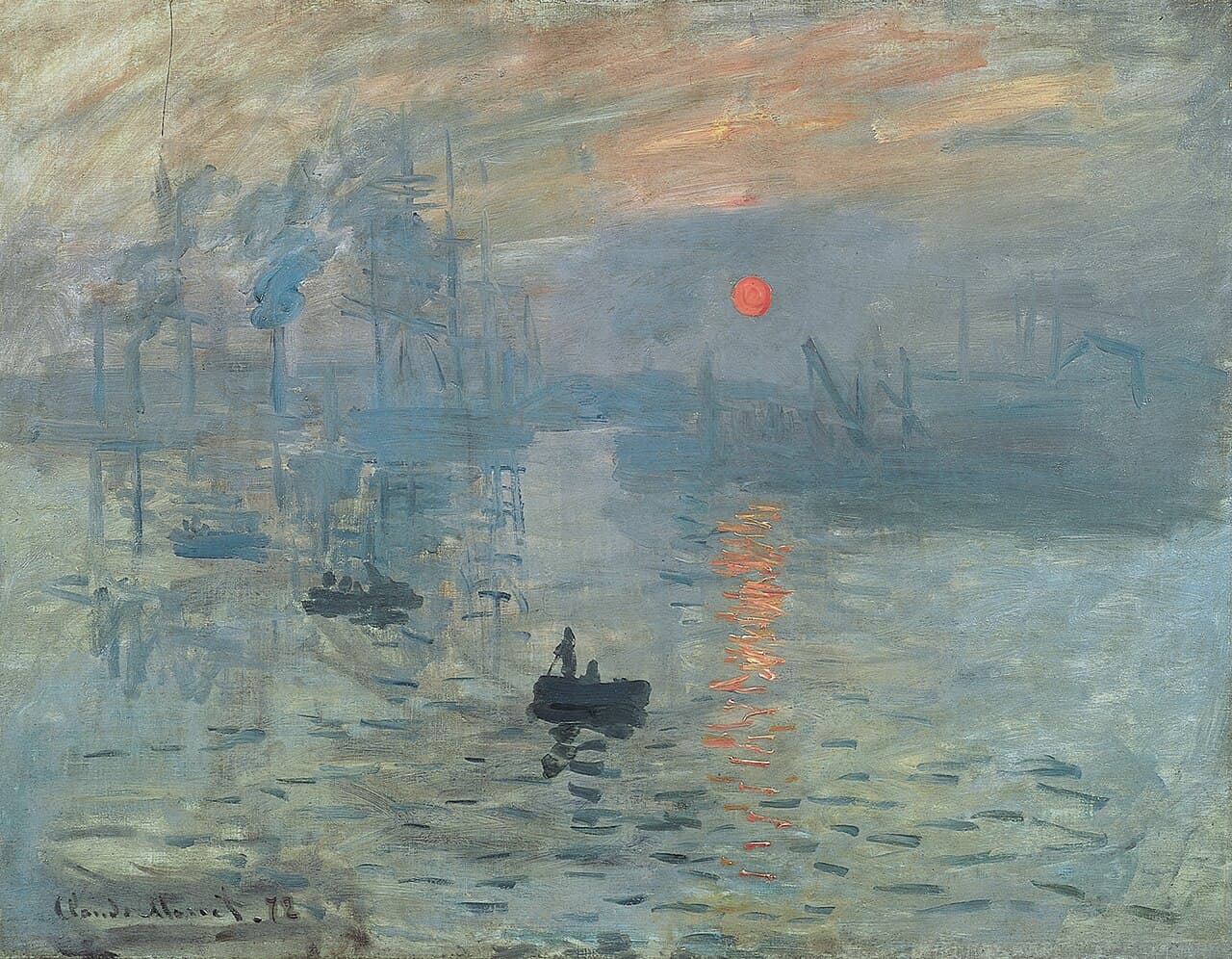
Monet never apologized for the blur. He believed his whole contribution as a painter was simply to work directly in front of nature, chasing the most fleeting effects of light rather than a tidy, posed version of a scene, in his words trying to "paint the air" itself.
That obsession with light became literal, and painful, at the end of his life. After the deaths of his second wife and his eldest son left him depressed, Monet began developing cataracts, and for years he refused surgery, frightened by the botched operations of fellow artists. When he finally had the operation in 1923, he could suddenly see colors as they truly were again, and he began destroying canvases from the years before the operation. By 1925 he was retouching some of those earlier works, giving them bluer water lilies than before. At his funeral, his friend Georges Clemenceau pulled the traditional black cloth off Monet's coffin, declaring "No black for Monet!" and replaced it with a flowered one instead.
Quiz me
0/3
Recap
Critic Louis Leroy coined "Impressionism" as an insult aimed at Monet's Impression, Sunrise, but the name outlived the insult, while Monet's late cataracts and surgery visibly bluer-shifted his final water lily paintings.
Surprising fact · Once cataract surgery let him see "the real colours" again, Monet began destroying paintings from his pre-operative years.
Sources (1)
No source, no claim. Every fact in this lesson (14 claims) cites at least one of these.