Can crows really solve Aesop's fable about the thirsty crow?
An ancient fable has a crow dropping stones into a pitcher to raise the water. It sounded like a tall tale, until a 2009 study found real birds doing exactly that.
▶ Start the storyYes, at least the crow's close cousins can. In August 2009, a study in the journal Current Biology showed that rooks, relatives of crows, do just what the bird in Aesop's fable does. In the story, a thirsty crow finds a pitcher with water too low for its beak; unable to tip it over, it drops pebbles in one by one until the water rises and it can drink. The Roman naturalist Pliny the Elder was already claiming that the tale reflected real corvid behavior.
Given stones and a tube of water with a reward floating out of reach, the rooks dropped stones in to raise it, and even picked the best stones to use. What made this more than a cute coincidence is how scientists read it: the behavior looks goal-directed and reflects real causal knowledge, the bird grasping that stones raise the water, rather than a habit learned by simple conditioning.
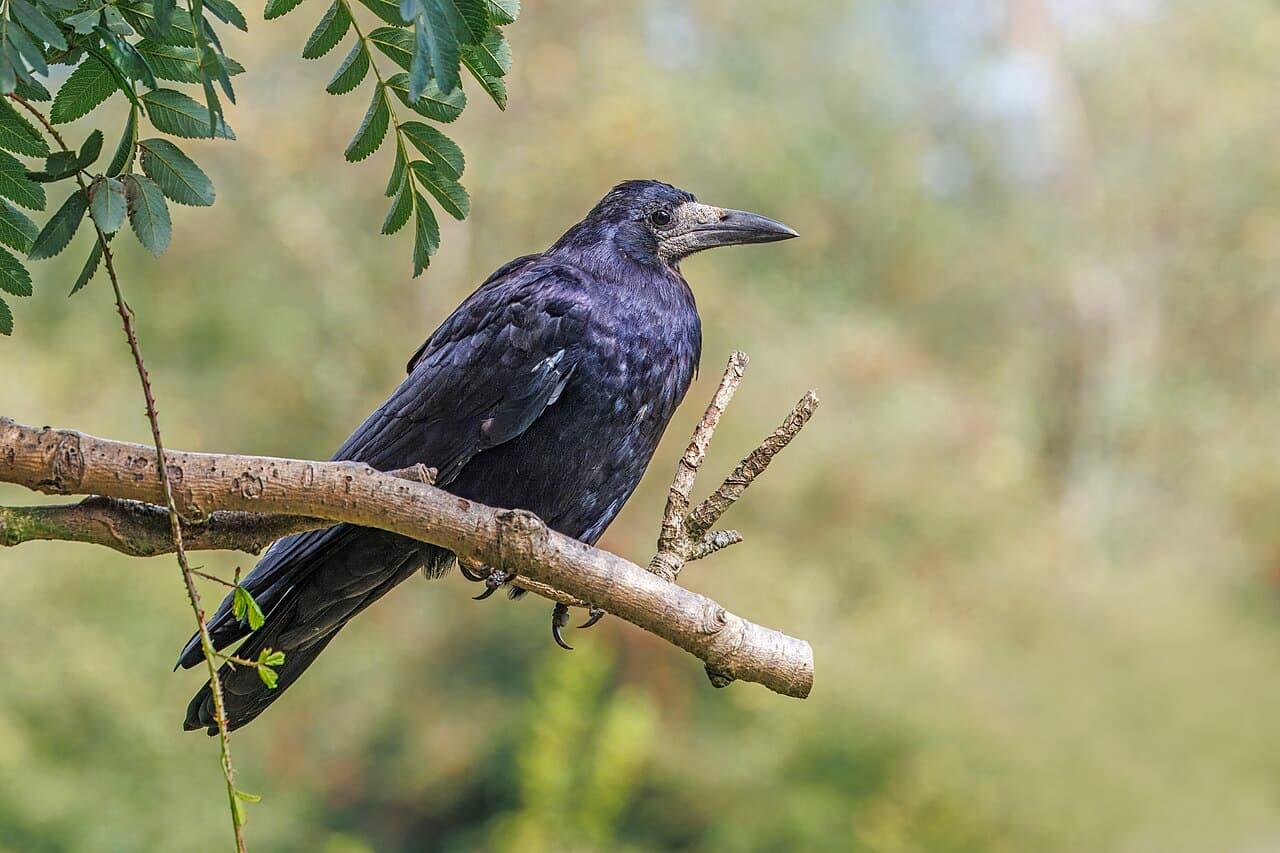
That kind of problem-solving fits a broader pattern across the crow family, known collectively as corvids. Corvids are considered among the most intelligent birds studied, with some species passing mirror self-recognition tests and others demonstrating genuine tool-making, skills once assumed to belong only to humans and a handful of other mammals. Their brains, relative to body size, are in the same range as non-human great apes and cetaceans such as dolphins, only slightly lower than our own.
The New Caledonian crow takes this even further. It pokes twigs at grubs hiding in crevices until they bite, then pulls them out, and it can even make hooks. It is also the only non-primate species with evidence of cumulative cultural evolution in toolmaking: these crows appear to have invented new tools by modifying old ones, then passed the innovations on to others in their group. Some researchers even suggest that its unusual chisel-like beak, with an upturned lower tip, evolved to hold a tool straight.
Quiz me
0/3
Recap
Given stones and a tube of water with a floating reward, rooks drop the stones in, and even pick the best ones for the job.
Surprising fact · The New Caledonian crow is the only known non-primate species that shows cumulative cultural evolution in tool design, passing new tool designs from bird to bird.
Sources (4)
No source, no claim. Every fact in this lesson (13 claims) cites at least one of these.