Why do we get goosebumps?
Goosebumps are your body trying to fluff up a fur coat you no longer have, or to puff you up like a scared cat.
▶ Start the storyYou get goosebumps because tiny muscles at the base of each hair, called arrector pili, suddenly contract and pull the hairs upright, raising a little bump of skin around each one. The command comes from the sympathetic nervous system, the same system behind many fight-or-flight reactions, which is why cold and fear both set it off.
For a furry animal, this makes perfect sense. Standing hairs trap a layer of air that works like insulation on a cold day. And when an animal is angry or scared, bristling fur makes it look bigger and scarier: think of a frightened cat, or a porcupine raising its quills. Humans have lost most of that fur, so many consider our goosebumps a vestigial reflex, a leftover from hairier ancestors. The coat is gone, but the button to fluff it up is still wired in.
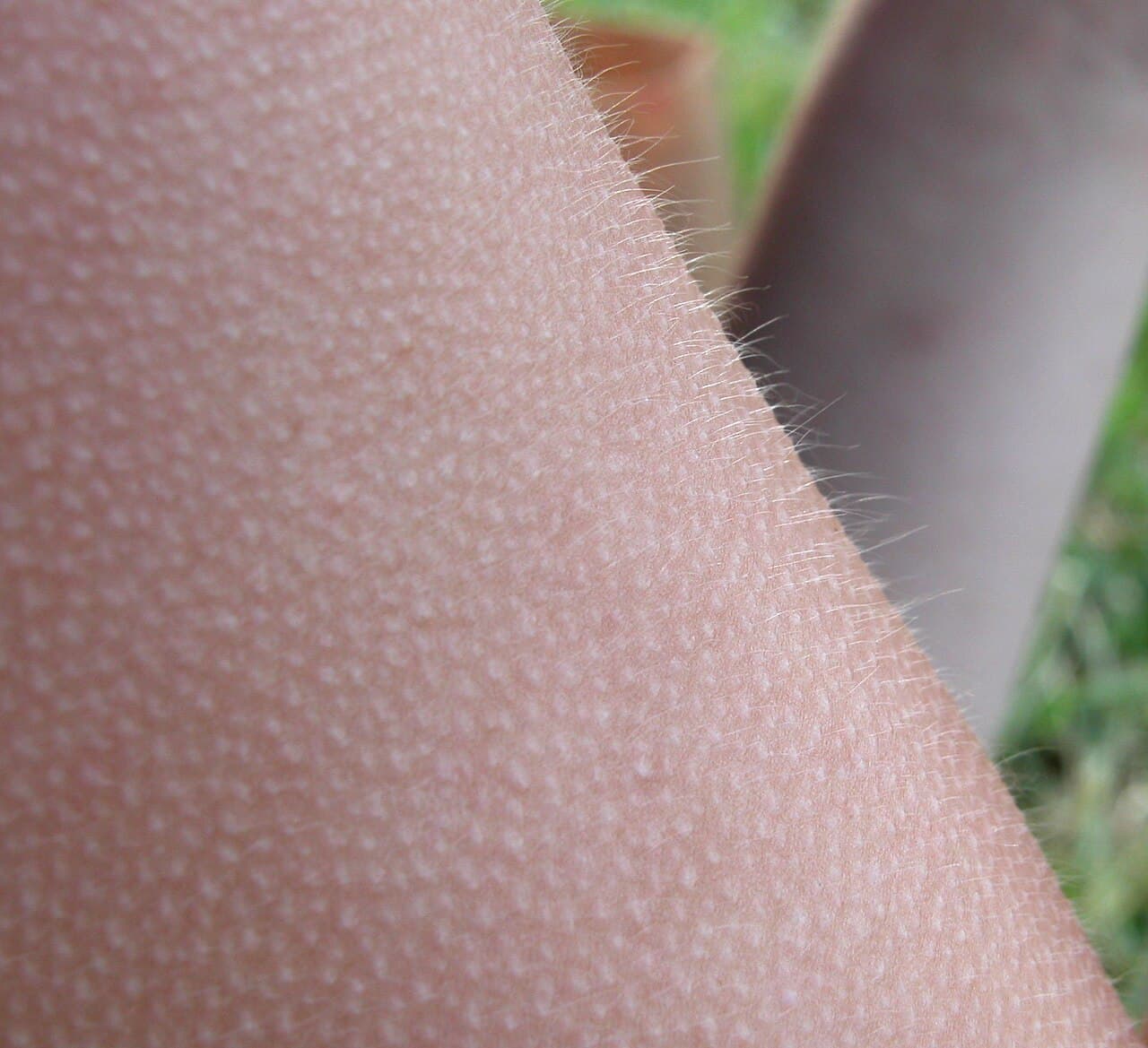
The odd part is how often emotions press that button. A horror film, nails on a chalkboard, or reliving the joy of winning a sports match can all do it. And the name? It comes from plucked goose skin, which is covered in bumps where the feathers were. French speakers look at a different bird: they get "chair de poule", hen's flesh.
Furry animal
- Raised fur traps insulating air
- Bristling makes it look bigger to enemies
Human
- Hair too sparse to insulate or intimidate
- Reflex survives, triggered by cold, fear, music or joy
Quiz me
0/3
Recap
Goosebumps are the body trying to fluff up a fur coat: warmth against cold, size against fear.
Surprising fact · The feeling of goosebumps doesn't always match actual goosebumps on the skin.
Sources (3)
No source, no claim. Every fact in this lesson (16 claims) cites at least one of these.