Why do prime numbers never run out?
A two-line argument written around 300 BC proves there is no biggest prime, and it still holds up today.
▶ Start the storyPrime numbers never run out because any list of primes you write down, however long, can be used to build a prime that isn't on it. Euclid showed this around 300 BC, in his book the Elements.
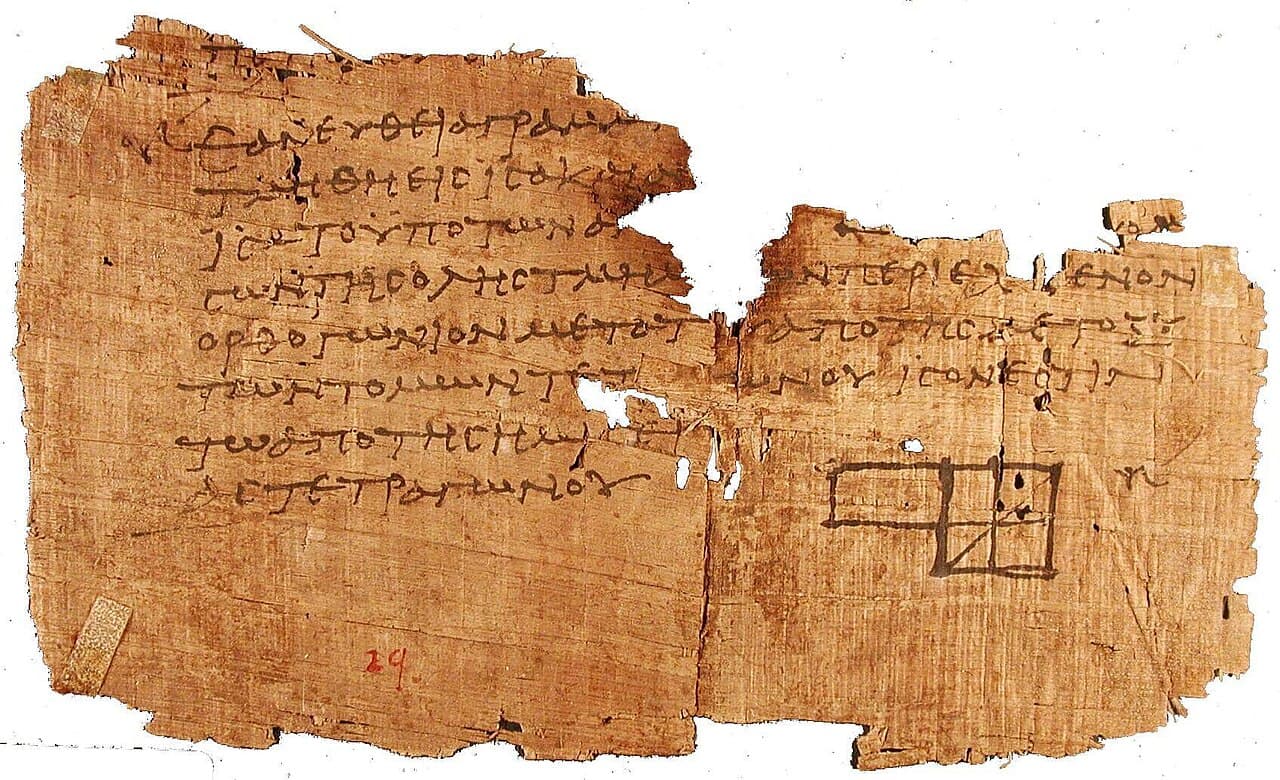
A prime is a whole number bigger than 1 that isn't the product of two smaller whole numbers, like 2, 3, 5 or 7. Here is Euclid's trick. Take your list of primes, multiply them all together, and add 1. Either that new number is prime, in which case you've found a prime missing from your list, or it isn't, in which case it can be divided by some prime. But that prime can't be on your list: every prime on the list divides the product exactly, so it would also have to divide the leftover 1, and no prime divides 1. Either way, your list was incomplete.
Step 1: Take any list of primes
However long you like.
Step 2: Multiply them all, add 1
Call the result q.
Step 3: If q is prime
It's a prime not on your list.
Step 4: If q isn't prime
Its prime factors can't be on the list: they'd have to divide 1.
Step 5: No list is ever complete
So there are infinitely many primes.
Since every list falls short, there is no biggest prime. That hasn't stopped people from hunting for the biggest known one. The current record, found in October 2024 on a computer volunteered by a researcher named Luke Durant, has more than 41 million digits.
Quiz me
0/3
Recap
Multiply your primes, add 1: whatever divides the result is a prime you didn't have.
Surprising fact · The largest known prime, found in 2024, has 41,024,320 digits.
Sources (3)
No source, no claim. Every fact in this lesson (14 claims) cites at least one of these.