Why do orchestras tune to an A at exactly 440 hertz?
The number that tunes nearly every instrument on Earth partly won because its rival, 439, was a prime number.
▶ Start the storyOrchestras tune to an A at 440 hertz because, after centuries of chaos, Europe's musicians and engineers agreed on it at a meeting in London in 1939, and the International Organization for Standardization made it official as ISO 16. There is nothing magical about the number. It won because musicians needed one shared reference, and because 440 beat its closest rival for a delightfully nerdy reason.
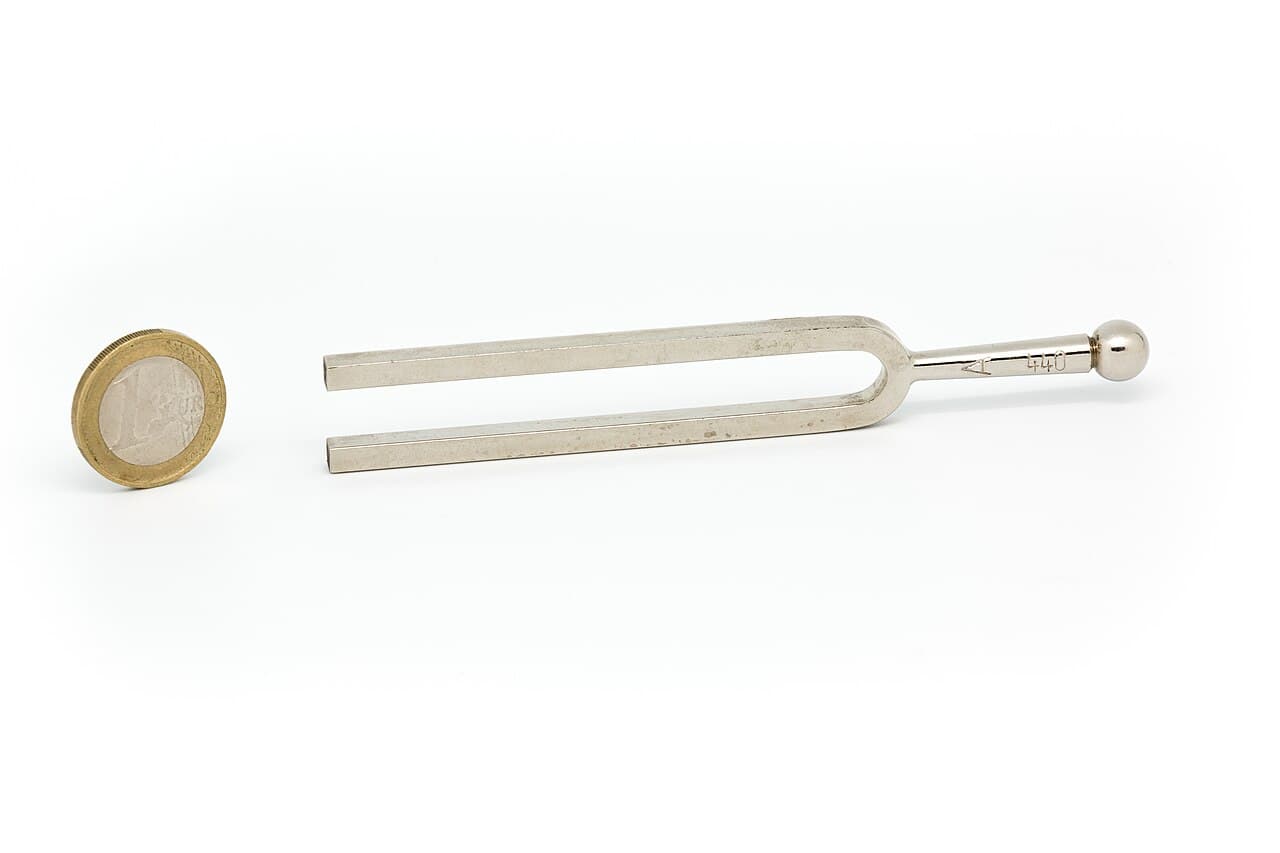
Before standards, pitch could differ by several semitones from one city to the next, and it tended to creep upward. French tuning forks show the A climbing from 390 hertz in 1795 to 449 hertz in 1855. Singers suffered, and after their protests France passed a law in 1859 to fix the pitch.
The final showdown came in Britain, where piano tuners used 439. Sir James Swinburne, an electrical engineer and amateur musician, pointed out that 439 is a prime number, while 440 is easy to divide and to produce electronically. At the BBC's Broadcasting House in 1939, delegates from five countries sided with him.
Even today, the rule bends: in continental Europe many orchestras tune a little higher, up to 444 hertz.
Quiz me
0/3
Recap
440 won in London in 1939 as a practical compromise, not because it is acoustically special.
Surprising fact · The engineer Sir James Swinburne argued against 439 partly because it is a prime number.
Connects to
- 🔢 Why isn't 1 a prime number?
- 🎹 Why do two notes an octave apart sound like the same note?
- Tuning fork
- Absolute pitch
- Pythagorean tuning
Sources (2)
No source, no claim. Every fact in this lesson (16 claims) cites at least one of these.