Why are the letters on your keyboard in such a strange order?
The layout under your fingers was designed for a 150-year-old machine with clattering metal arms, and it never went away.
▶ Start the storyThe letters on your keyboard are in QWERTY order because of a typewriter from the 1870s. Its inventor, Christopher Latham Sholes, was a newspaper editor and printer in Kenosha, Wisconsin. His first model had a piano-like keyboard with the letters simply in alphabetical order. Then he spent five years shuffling the keys around by trial and error.
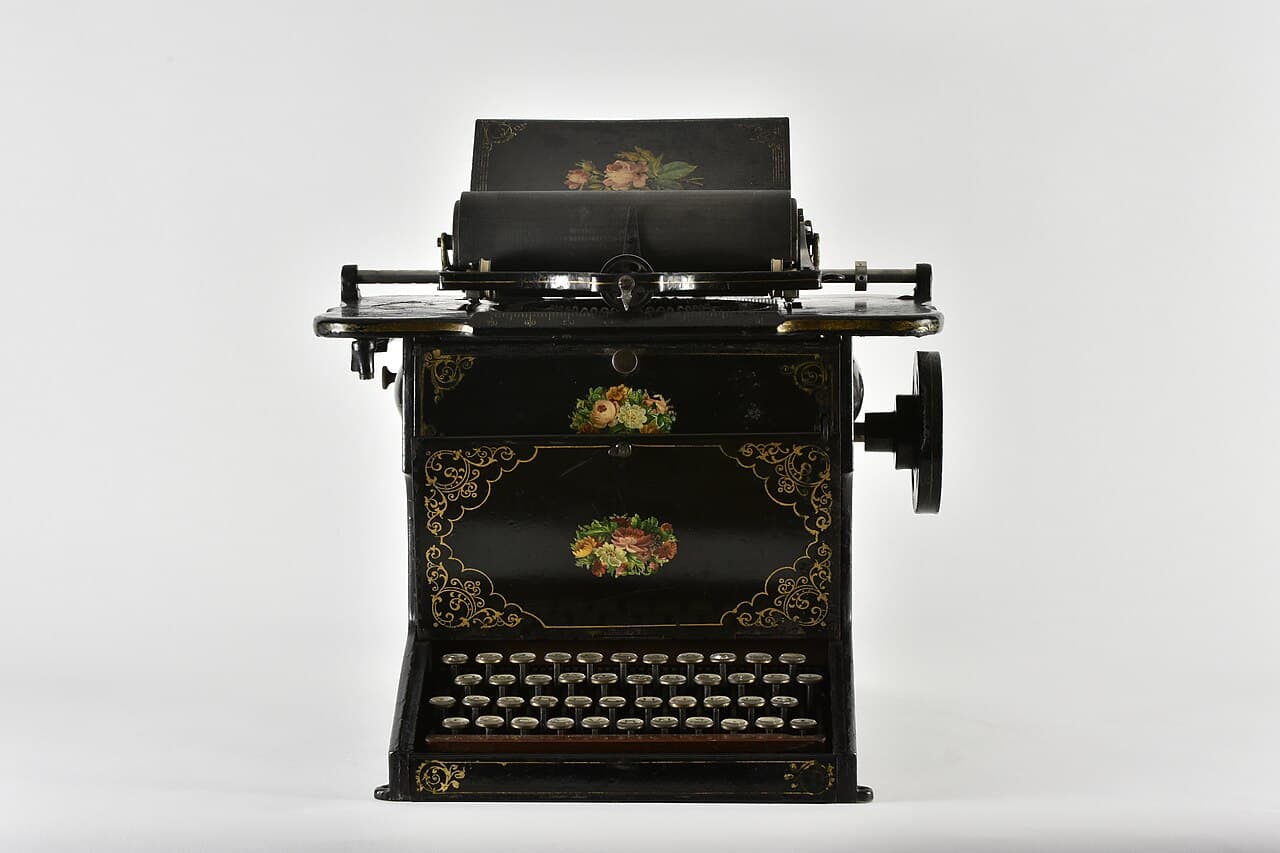
The usual explanation is mechanical. On his machine, pressing two neighbouring keys quickly could make their metal typebars collide and jam, so letters that often come in pairs, like S and T, were placed on opposite sides of the mechanism. Historians are not unanimous, and some call this story possibly invented. But one popular belief is clearly wrong: QWERTY was not designed to slow typists down. Splitting up frequent letter pairs can actually speed typing, because it makes your hands take turns.
When the gun maker Remington bought the design, its mechanics made final tweaks, such as moving the R key to where the full stop had been. Legend says this let salesmen show off by typing TYPE WRITER on a single row, but nobody has proved it. Look at the middle row of your keyboard and you can still see a fossil of the alphabet: D F G H J K L.
So why do we still use it? QWERTY took off with the Remington No. 2 of 1878, and once so many people had learned it, switching became costly. Economists call this path dependence. Rivals like the Dvorak layout of 1936 promised more speed, though whether they are really better is still debated.
Quiz me
0/3
Recap
Your keyboard's letter order is a typewriter-era fossil that survived because everyone had already learned it.
Surprising fact · QWERTY was not designed to slow typists down; splitting up common letter pairs can actually make hands alternate and type faster.
Connects to
- ⌨️ Why didn't the 'better' keyboard ever replace QWERTY?
- Path dependence
- Typewriter
- Letter frequency
Sources (4)
No source, no claim. Every fact in this lesson (16 claims) cites at least one of these.