If the universe is full of stars, why is the night sky dark?
A detective-story writer guessed the answer in 1848, a decade before any scientist published it.
▶ Start the storyIf the universe is infinite, eternal, and crammed with stars, then every direction you look should eventually hit a star's surface. The whole sky should glow like one giant sun. Instead, the night sky is mostly black. That contradiction is called Olbers' paradox, and it bothered astronomers for centuries before anyone could explain it properly.
The puzzle is older than its name. Kepler raised a version of it in 1610, and Halley and Cheseaux wrestled with it in the 1700s. It is named after Heinrich Wilhelm Olbers, who described it in 1823. He was a German doctor who did his astronomy at night, from an observatory built into his own house.
A strange early guess came from a writer, not a scientist. In 1848 Edgar Allan Poe published Eureka, a long essay about the universe that he called a prose poem. He had no scientific research behind it, and many found it absurd in his lifetime. Yet Poe reasoned that if stars truly filled an endless background, the sky should glow everywhere, uniform as the Milky Way's glow. Since it doesn't, he guessed that light from the farthest stars simply has not had time to reach us yet.
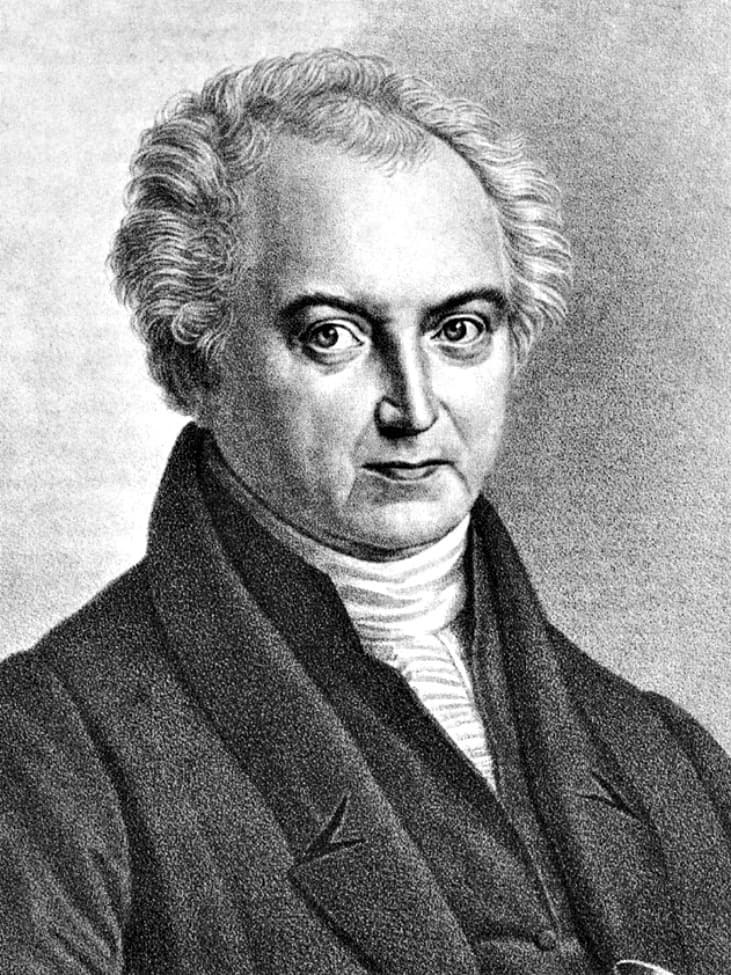
That guess pointed in the right direction. A decade later, Johann Heinrich von Mädler proposed in scientific literature that a universe with a finite age would solve the problem: there just hasn't been enough time for light from infinitely many stars to arrive. Today the full answer has three parts. The universe is not infinitely old. Its expansion stretches the oldest light into invisible microwaves. And gas along the way absorbs some starlight and gives it back as infrared.
Quiz me
0/3
Recap
An infinite, eternal universe of stars would light up the whole sky; ours doesn't, because it hasn't existed for infinite time.
Surprising fact · Edgar Allan Poe's 1848 essay Eureka guessed that the sky's dark patches meant light from the most distant stars hadn't reached us yet, years before scientists published the same idea.
Sources (3)
No source, no claim. Every fact in this lesson (12 claims) cites at least one of these.