Why does one nerve run from your brainstem all the way to your gut?
A single nerve slows your heart, triggers your gag reflex, and can make you faint from fear, and a frog heart experiment revealed how it talks to your organs.
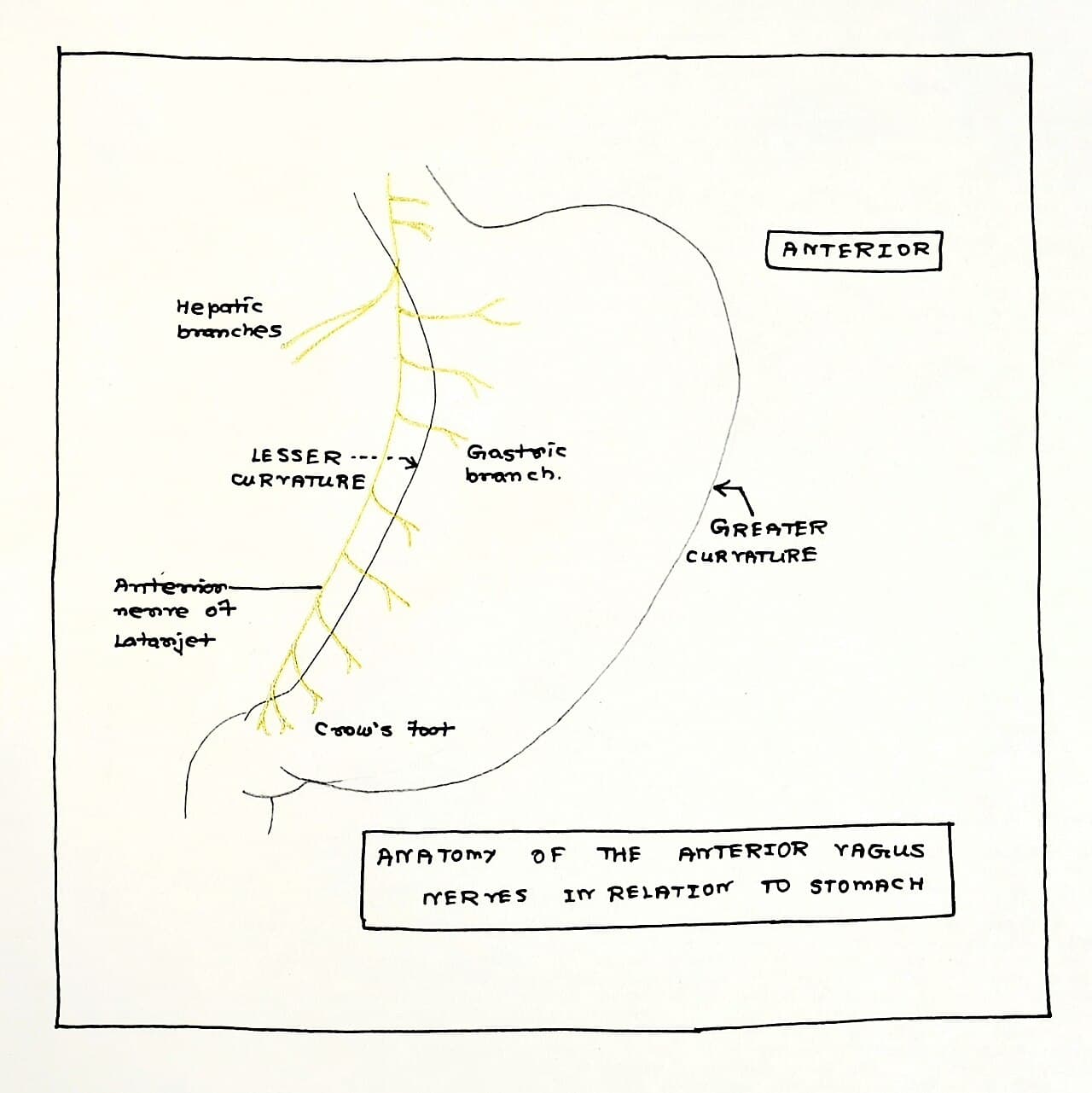
▶ Start the storyOne nerve runs from your brainstem all the way down to your colon because its job is to carry the brain's "rest and digest" signals to almost every organ along the way. The vagus nerve, also called the tenth cranial nerve, is the longest nerve in the autonomic nervous system, and it supplies parasympathetic fibers to every organ from the neck down to the second part of the transverse colon except the adrenal glands. As the key channel of the "rest and digest" response, it lowers heart rate, helps digestion, and keeps the body's internal balance steady after a stressful moment passes.
That single nerve ends up responsible for a strange mix of jobs: heart rate, gut movement, sweating, the gag reflex at the back of your throat, several muscles involved in speech, and even part of how your body manages inflammation. It earned an old nickname, the "pneumogastric nerve," for its reach into both lungs and gut, though its effect on the heart turned out to matter just as much.
How the nerve actually talks to an organ was shown by a frog heart experiment. Neuroscientist Otto Loewi electrically stimulated the vagus nerve attached to a frog's heart, which slowed the beat, then took the fluid bathing that heart and dripped it onto a second frog's heart that had no vagus nerve attached at all. The second heart slowed down too, with no electrical signal involved, proving the first nerve had released a chemical messenger rather than just an electrical pulse. It was the first demonstration that nerves secrete substances now called neurotransmitters. Loewi called this one "vagusstoff"; it turned out to be acetylcholine.
That same nerve has a dramatic downside: when emotional stress overactivates it, the sudden drop in heart output can starve the brain of blood and cause someone to faint, a reaction called vasovagal syncope that hits young children and women more than other groups, and can even cause temporary loss of bladder control under extreme fear. Today, doctors can also deliberately stimulate the vagus nerve with an implanted device to treat epilepsy and depression that hasn't responded to medication.
Quiz me
0/3
Recap
Otto Loewi proved the vagus nerve signals chemically, not just electrically, by transferring fluid from one stimulated frog heart to a second heart that slowed down without any shock.
Surprising fact · Overactivation of the vagus nerve under extreme stress can cause fainting, called vasovagal syncope, and even temporary loss of bladder control.
Sources (1)
No source, no claim. Every fact in this lesson (13 claims) cites at least one of these.