Why does chili feel hot when it isn't?
A chili pepper doesn't heat your mouth at all: it picks the lock of the sensor your body uses to detect fire.
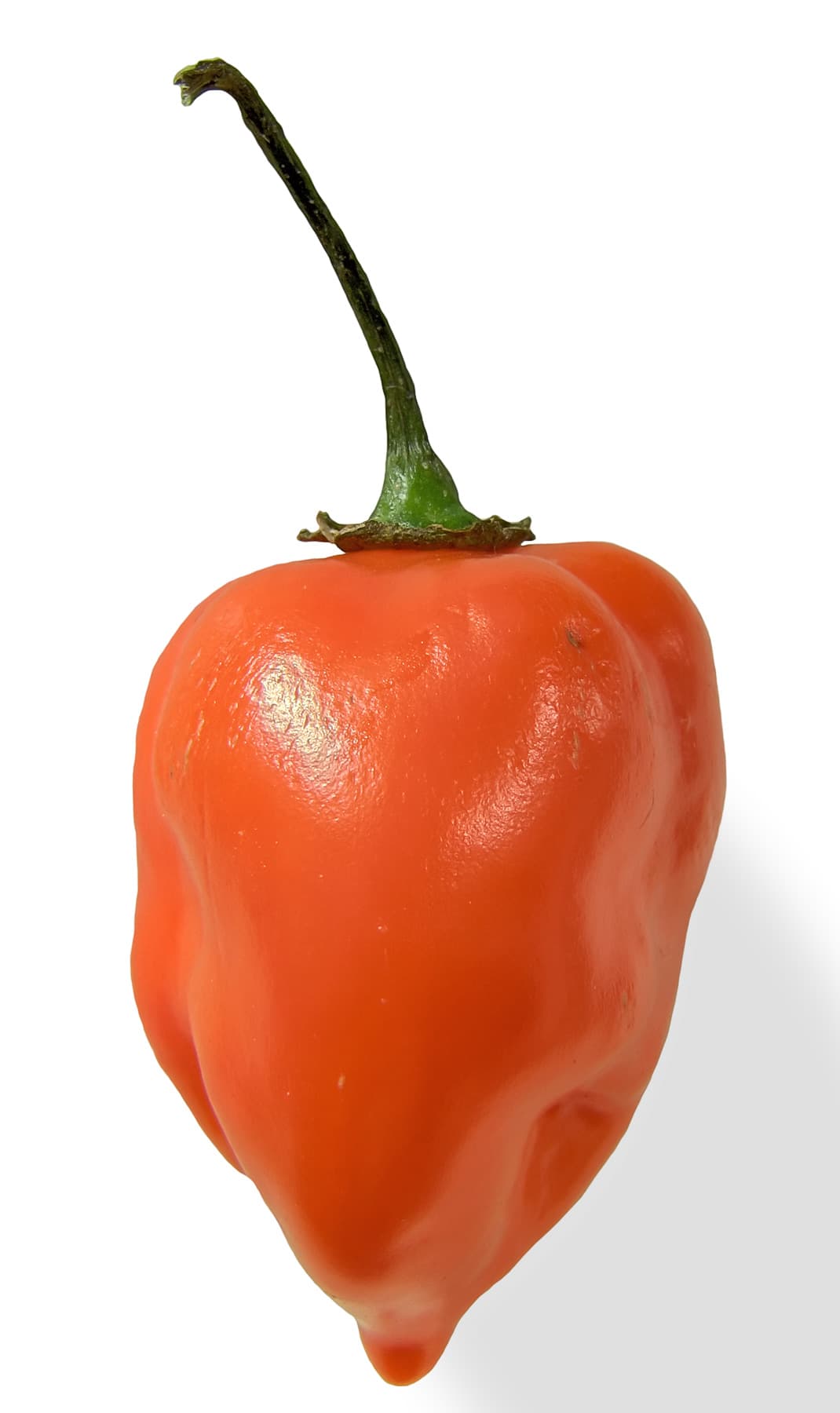
▶ Start the storyChili feels hot because its main active compound, capsaicin, tricks your body's heat alarm. Your mouth and skin carry a sensor called TRPV1, whose normal job is to fire when something is hotter than about 43 °C. Capsaicin binds to that same sensor and sets it off, so your nerves report warming, tingling or stinging, exactly as if you had touched something scalding. Nothing is actually burning; the message is false, but your brain has no way of telling.
The sensor was pinned down in 1997 by the lab of the American physiologist David Julius, who showed that the capsaicin receptor also detects painful heat. That work helped earn him a share of the 2021 Nobel Prize in Physiology or Medicine.
The trick has a purpose. Birds' version of TRPV1 ignores capsaicin, while mammals' is very sensitive. Birds swallow chili seeds whole and spread them, whereas mammals crush them with their molars, so the plant's chemical punishes exactly the animals it doesn't want.
If you overdo it, skip the water: capsaicin dissolves in fat rather than water. Milk, butter or ice cream work much better, as the pharmacist Wilbur Scoville, the inventor of the chili heat scale, already noted.
Quiz me
0/3
Recap
Chili doesn't heat you, it fools your heat sensor, and because capsaicin dissolves in fat, milk soothes it better than water.
Surprising fact · The seeds make no capsaicin at all; the heat is concentrated in the white pith that holds them.
Connects to
- 🦋 How does natural selection actually change a species?
- Trpv1
- Scoville scale
- Seed dispersal
Sources (6)
No source, no claim. Every fact in this lesson (16 claims) cites at least one of these.