Why do some rivers never reach the ocean at all?
About 18 percent of Earth's land drains to no ocean at all. Its water ends in lakes, swamps and salt flats.
▶ Start the storySome rivers never reach the ocean because the land they flow through is a closed bowl. About 18 percent of Earth's land drains into endorheic basins, from Greek roots meaning "flow within": the water runs into lakes and swamps with no outlet and leaves only by evaporating or seeping into the ground. Such basins usually sit far inland, in dry areas, walled in by mountains or other landforms that block the way to the sea. The biggest endorheic water body is the Caspian Sea, the world's largest inland body of water.
Rain decides whether a basin stays closed. Where rainfall is higher, erosion tends to carve a channel out, or the lake rises until it spills over and the basin opens up. That is probably what happened to the Black Sea, likely once a closed lake until the Mediterranean broke through. In deserts, where most closed basins are found, evaporation wins and the system stays shut.
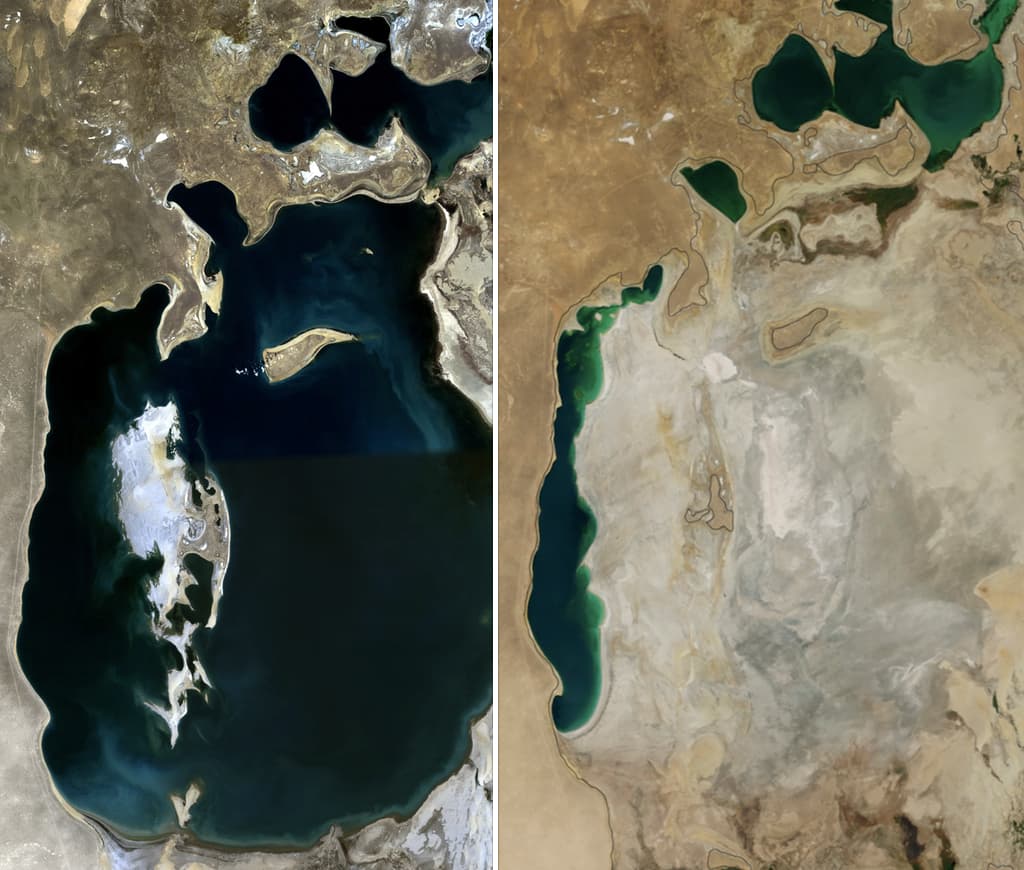
Because water escapes only into the air, whatever it carries stays behind. Minerals leached from the surrounding rocks are left when the water evaporates, so many closed lakes turn salty, and many basins hold huge salt flats so perfectly level that they serve as runways and for land speed record attempts. Pollution gets trapped the same way. And when dams and aqueducts divert the rivers that feed these lakes, the lakes shrink, turning saltier and more polluted. The Aral Sea, whose rivers were diverted, shrank so dramatically that its ecological disaster brought closed basins to public attention.
Quiz me
0/3
Recap
Water leaves a closed basin only into the air or the ground, so whatever it carried stays behind, making salt lakes and salt flats.
Surprising fact · About 18 percent of Earth's land drains to no ocean, and the Caspian Sea is the largest such body of water.
Sources (1)
No source, no claim. Every fact in this lesson (18 claims) cites at least one of these.