How did the D-Day landings fool Hitler about where they'd strike?
The Allies invented an entire fake army, gave it to a real general the Germans feared, and let a Spanish double agent earn medals from both sides for selling the lie.
▶ Start the storyThe Allies fooled Hitler by convincing him that Normandy was a sideshow. The main blow, he was led to believe, would fall later at the Pas-de-Calais, the shortest crossing of the English Channel. This deception, Operation Fortitude, used phantom armies to pull German attention away from Normandy before D-Day, and to keep it away afterwards.
What actually happened
- 24,000 airborne troops, then amphibious landings on 5 Normandy beaches, 6 June 1944
What the Germans were led to expect
- A diversionary strike, with a bigger invasion still to come at Pas-de-Calais under a fake army (FUSAG) led by George Patton
Its centerpiece was an army that did not exist: the First US Army Group, supposedly gathering in southern England. To make it believable, it was given to General George Patton, a commander the Germans held in high regard. German air reconnaissance over Britain was almost nonexistent, so dummy tanks mattered little. The lie travelled through fake radio traffic and double agents. The Spanish double agent Juan Pujol García, codenamed Garbo, invented a network of 27 agents. The Germans trusted him so much that they awarded him the Iron Cross. Britain later gave him an MBE for the same work.
It worked. On 1 June, Allied codebreakers read a report from Japan's ambassador in Berlin. Hitler had told him he expected diversions in several places, then a main attack across the Strait of Dover. On 6 June 1944, 24,000 airborne troops landed, followed by sea landings on five Normandy beaches. For weeks afterwards, perhaps until September, the Allies kept the fake threat to Pas-de-Calais alive. Most German reserves stayed there, waiting for an attack that never came.
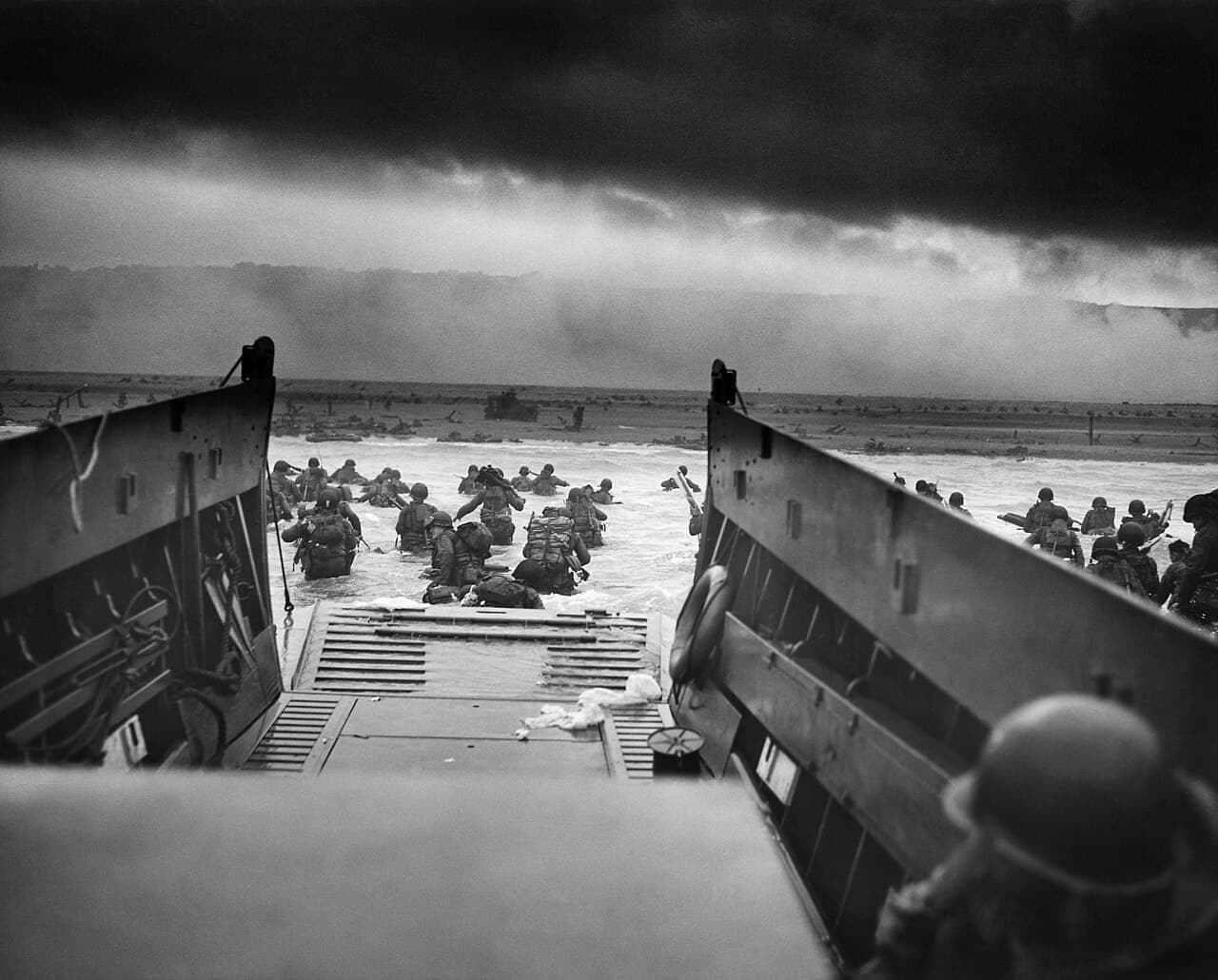
The landings were still deadly. Soldiers came ashore under fire from gun emplacements, through mines, wooden stakes, metal tripods and barbed wire. Casualties were highest at Omaha, below its high cliffs. German losses that day are estimated at 4,000 to 9,000. Allied casualties were at least 10,000, with 4,414 confirmed dead. All five beachheads were held by nightfall, but Caen, a major objective, was not captured until 21 July.
Quiz me
0/3
Recap
The Allies convinced the Germans the real attack would come at the Pas-de-Calais, under a real general leading a fake army, and kept up the bluff for weeks after landing in Normandy.
Surprising fact · Double agent Juan Pujol García (Garbo) received the Iron Cross from Germany and later an MBE from Britain for the very same deception operation.
Sources (2)
No source, no claim. Every fact in this lesson (13 claims) cites at least one of these.