How did crowdsourcing work before the internet existed?
In 1884, the first part of the Oxford English Dictionary relied on 800 volunteers cataloguing words, more than a century before anyone coined a word for what they were doing.
▶ Start the storyThe same way it works today, only slower: by broadcasting a problem to the public and making an open call for contributions to help solve it. That is the one constant across the many definitions of crowdsourcing. The word itself is new, coined in 2006 by two Wired editors, Jeff Howe and Mark Robinson, to describe how businesses were using the internet to "outsource work to the crowd". But crowdsourcing is not limited to online activity, and there are many historical examples.
In 1714, the British government, looking for a way to measure a ship's longitude, offered the public a cash prize for the best solution. In 1848, Matthew Fontaine Maury gave away 5,000 copies of his wind and current charts on one condition: sailors had to send a standardized log of their voyage back to the U.S. Naval Observatory. By 1861 he had handed out 200,000 copies on the same terms. In 1849, the Smithsonian Institution set up a network of some 150 volunteer weather observers across the United States, using the telegraph to gather their data into a large weather map; the project is considered the origin of the National Weather Service.
Words and money were crowdsourced too. The first fascicle of the Oxford English Dictionary, in 1884, relied on 800 volunteers who catalogued words. In 1885, people donated more than $100,000 to build the pedestal of the Statue of Liberty. Contests counted as well: in 1916, a 14-year-old boy won the Planters Peanuts contest with the Mr. Peanut logo, and in 1957 Jørn Utzon won the design competition for the Sydney Opera House.
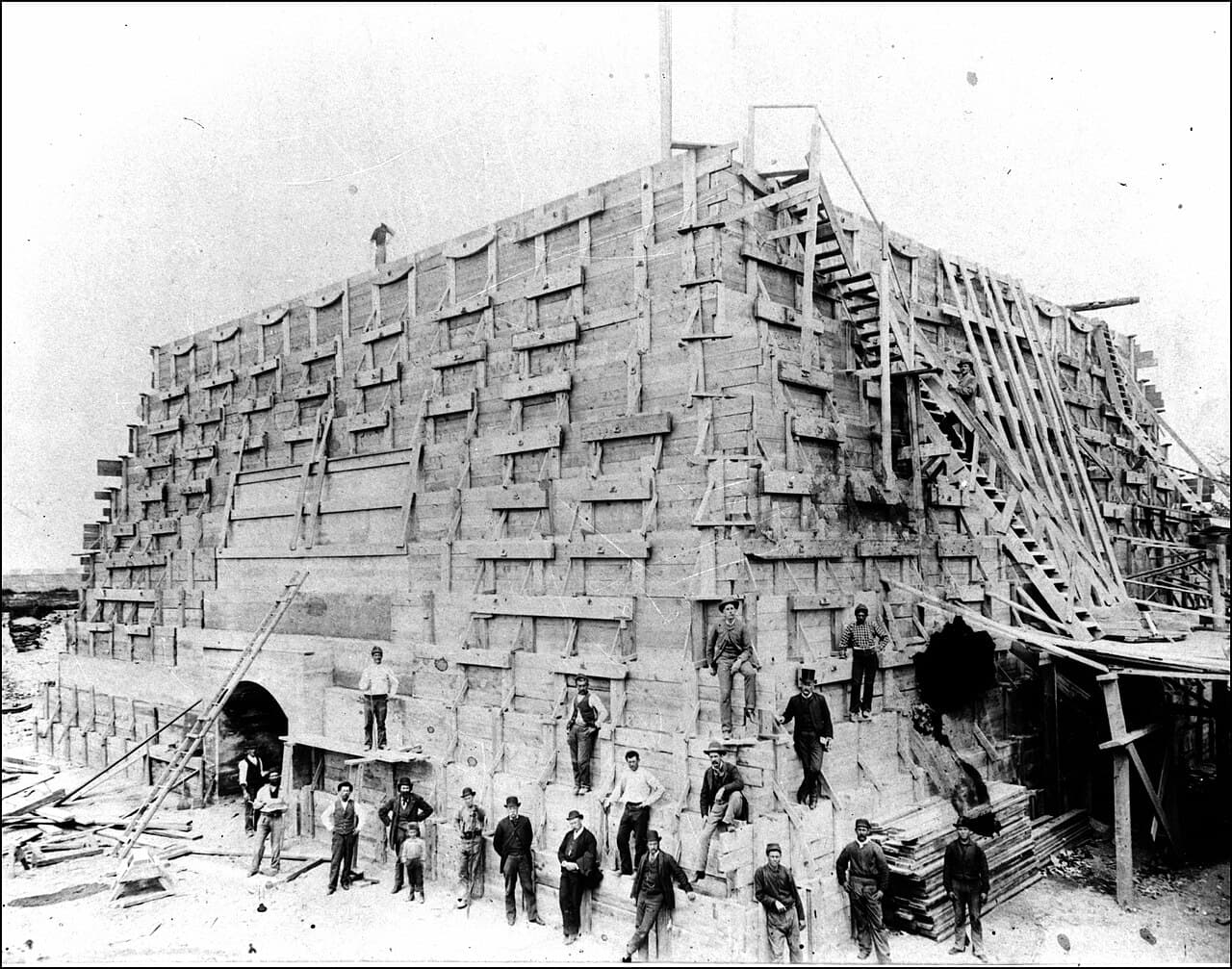
The internet gave the old pattern new tools. Platforms such as Amazon Mechanical Turk match small tasks to workers, nonprofits use crowdsourcing to build common goods such as Wikipedia, and podcast communities have used it to try to solve cold cases and find missing people.
Quiz me
0/3
Recap
The one constant across every crowdsourcing example, digital or historical, is an open call broadcast to the public inviting contributions to solve a shared problem.
Surprising fact · The Oxford English Dictionary's first fascicle in 1884 relied on 800 volunteers, more than a century before anyone coined the word 'crowdsourcing'.
Sources (1)
No source, no claim. Every fact in this lesson (15 claims) cites at least one of these.