How do some animals vanish without moving an inch?
An octopus can rewrite the colours of its whole skin in a flash, using tiny pigment sacs that its brain stretches open and lets snap shut.
▶ Start the storyMost camouflaged animals don't need to move at all to disappear: their fixed colour and pattern already blend with the background, break up their outline with blotches and stripes, or flatten their shadow so they read as part of the scenery rather than a shape sitting on top of it. But a smaller group of animals, including octopuses, chameleons and frogs, can change their disguise on demand, using skin cells called chromatophores that each hold a single colour of pigment and can be expanded or shrunk to control how much of that colour shows.
Octopuses take this furthest. Each of their chromatophores sits inside a tiny elastic sac wired directly to muscles and nerves that answer straight to the brain, so the sac can be stretched wide open or allowed to relax, letting an octopus rapidly rewrite its skin pattern and colours. Fish and frogs have a slower version of the same idea: cells called melanophores spread or gather their dark pigment, but in frogs the process is controlled mainly by hormones, so it is relatively slow.
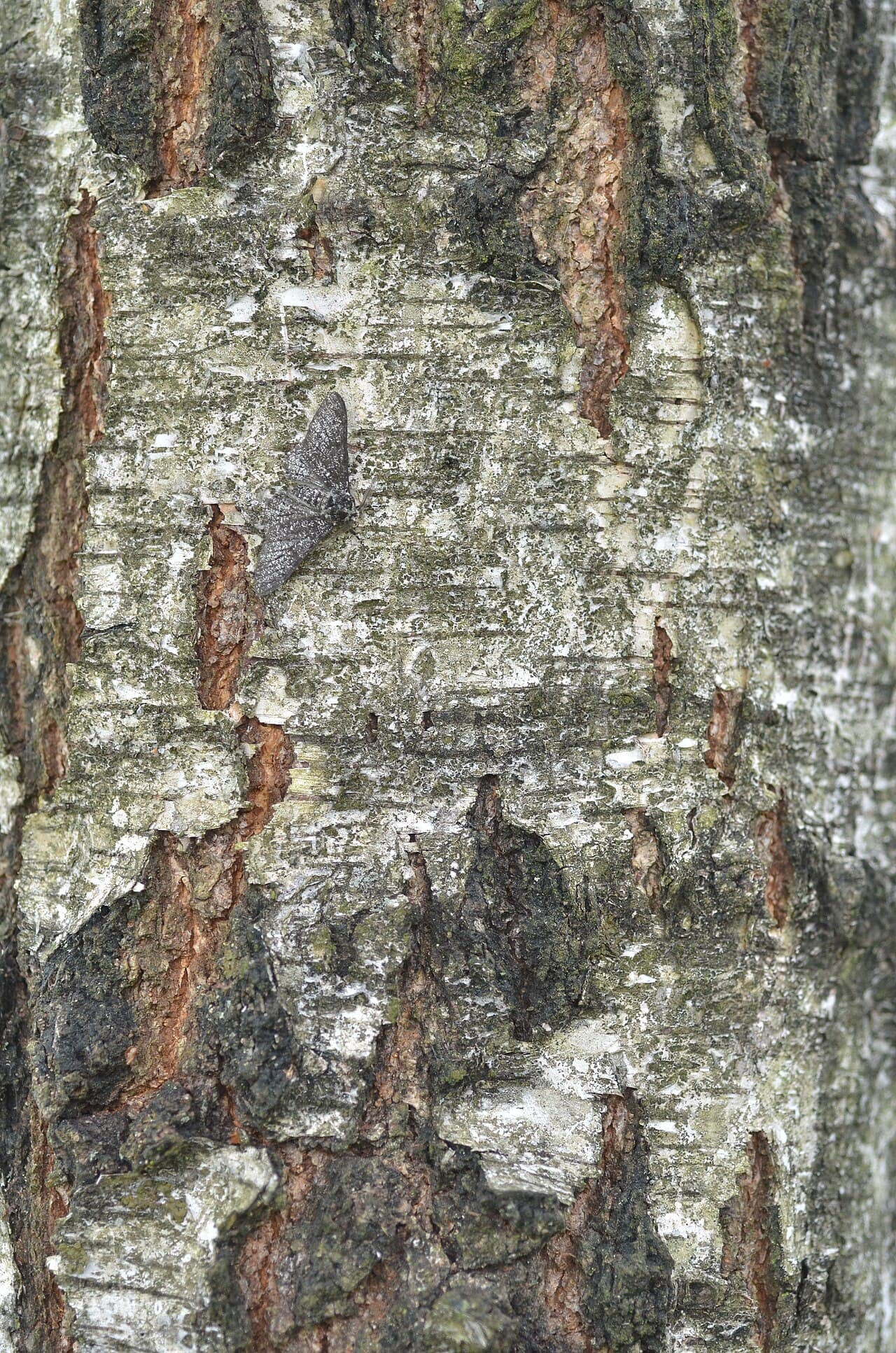
Camouflage changes on other timescales too. Peppered moths famously shifted from pale, mottled wings to almost black between 1860 and 1940 in polluted areas, matching the darkening tree trunks they rest on, a textbook case of evolution reshaping an animal's disguise generation by generation rather than second by second.
Quiz me
0/3
Recap
An animal can hide by never changing at all, by changing rapidly through brain-controlled skin cells, or by changing across generations through natural selection, as peppered moths did.
Surprising fact · Octopus chromatophores are pigment sacs stretched or relaxed under the brain's control, letting the animal rapidly change its skin pattern.
Sources (1)
No source, no claim. Every fact in this lesson (11 claims) cites at least one of these.