How did a former slave's advice help a prisoner of war endure seven and a half years?
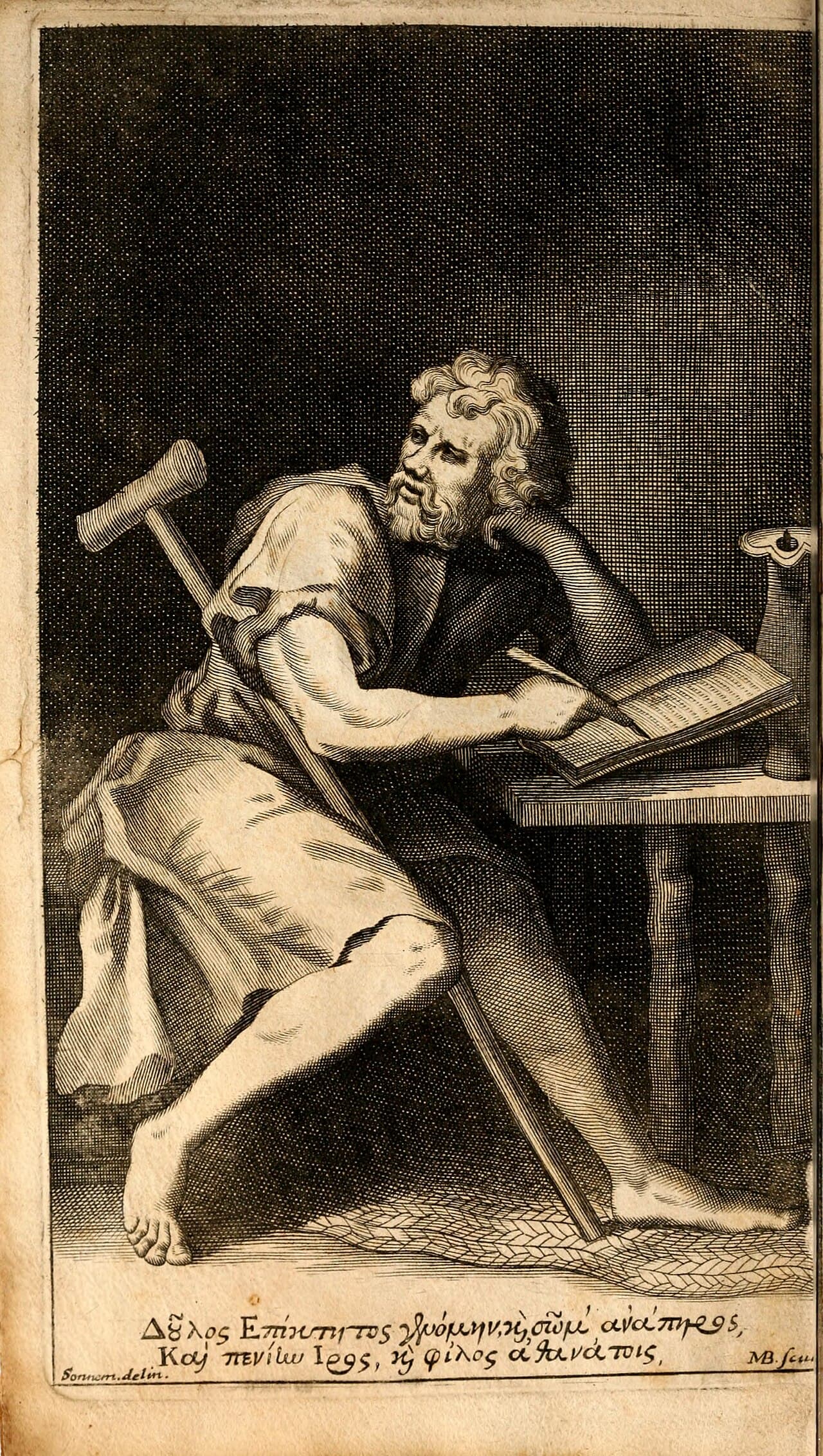
Epictetus was born a slave and may have had his leg broken by his master; his rule about what's "up to us" later carried a US Navy pilot through years of torture.
▶ Start the storyBy teaching him to sort everything into two piles: what is up to you, and what isn't. That idea comes from Epictetus, a Greek Stoic philosopher born into slavery around AD 50. His handbook, the Enchiridion, opens with it: "Of things, some depend upon ourselves, others do not depend upon ourselves."
For Epictetus, external events are beyond our control, so we should meet them calmly. What we do control is our own actions and our judgments, and that's where our responsibility lies. "What upsets people is not things themselves but their judgments about the things," he taught. Freedom, in this view, means wishing for nothing that isn't up to you.
Up to us
- Our judgments
- Our actions
- What we wish for
Not up to us
- External events
- Misfortune
- A jug that breaks
He had reason to think hard about this. As a young slave in Rome, he belonged to a secretary of the emperor Nero, and he became disabled; one ancient writer claimed his master had deliberately broken his leg. Freed after Nero's death, he became a teacher, but he never wrote anything down: his pupil Arrian recorded his lessons.
Nearly two thousand years later, US Navy pilot James Stockdale was shot down over North Vietnam in 1965 and held in the "Hanoi Hilton" for more than seven years, routinely tortured. He credited the Enchiridion with giving him strength. The same idea, that our thoughts about events shape our distress, later inspired the therapies that led to cognitive behavioral therapy.
Quiz me
0/3
Recap
Things don't upset us; our judgments about them do, and those judgments are up to us.
Surprising fact · James Stockdale credited Epictetus's handbook with giving him strength through more than seven years as a prisoner of war.
Connects to
- Stoicism
- Marcus aurelius
- Cognitive behavioral therapy
- Rational emotive behavior therapy
- James stockdale
Sources (4)
No source, no claim. Every fact in this lesson (16 claims) cites at least one of these.